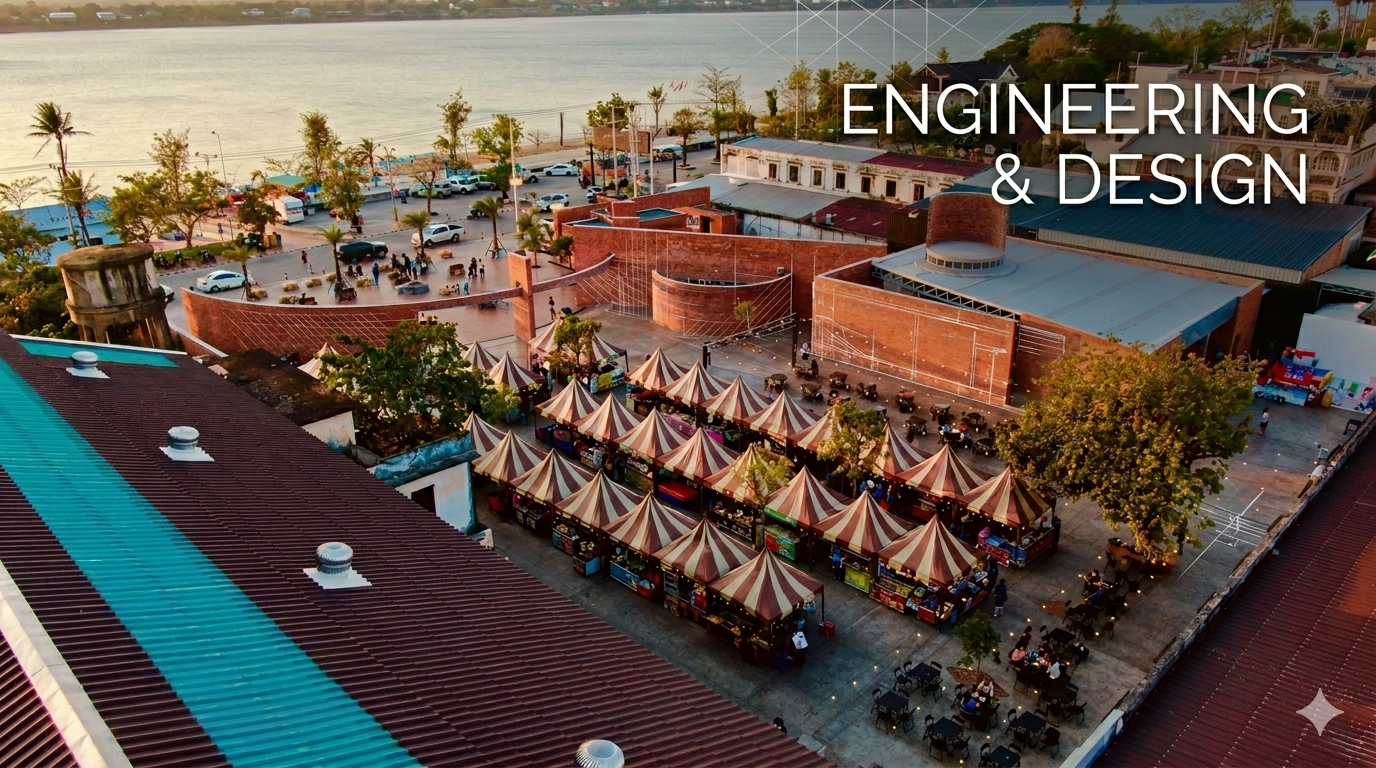
Engineering & Design
Description
With over 15 years of global expertise, Archineer Associate delivers comprehensive engineering and design services tailored to the specific requirements of every client, industry. By leveraging our deep regional presence, we provide a localized understanding of complex project needs, ensuring that every unique challenge is met with a precise, high-quality solution.
Why Global Leaders Choose Us
- 15+ Years of Global Expertise We bring a decade and a half of international experience to every project, ensuring world-class standards are met on every continent.
- Deep Regional Presence We don't just design; we understand. Our localized insight allows us to navigate complex regional regulations and environmental factors that others miss.
- Meticulous Technical Excellence Through rigorous cross-functional reviews and seamless interdisciplinary coordination, we eliminate errors before they reach the field.
- End-to-End Administrative Support We able to handle the heavy lifting. From core design to the acquisition of all necessary project permits, we ensure a frictionless transition from concept to implementation.
AA provides the following services:
- ·
- ·
- ·
- ·
- ·
- ·
- ·
- ·
- ·
- ·
- ·
- ·
AA'S Services
Pre-design
is the information-gathering and analysis phase that happens before a single line of the actual building is drawn. It involves investigating the physical, legal, and environmental constraints of a site. it specifically focuses on Topographical Surveys and Soil Investigation. essentially creating a digital twin of the land so the architects and engineers don't have to guess where the boundaries are or how soft the dirt is.
Design Brief
Design Brief as the foundational DNA of a project. It is a comprehensive document that translates a client's abstract ideas into specific, actionable requirements. It isn't just a wish list; it's a formal program that defines the boundaries of the project—what it must do, what it must look like, and how much it can cost.
The Concept Design
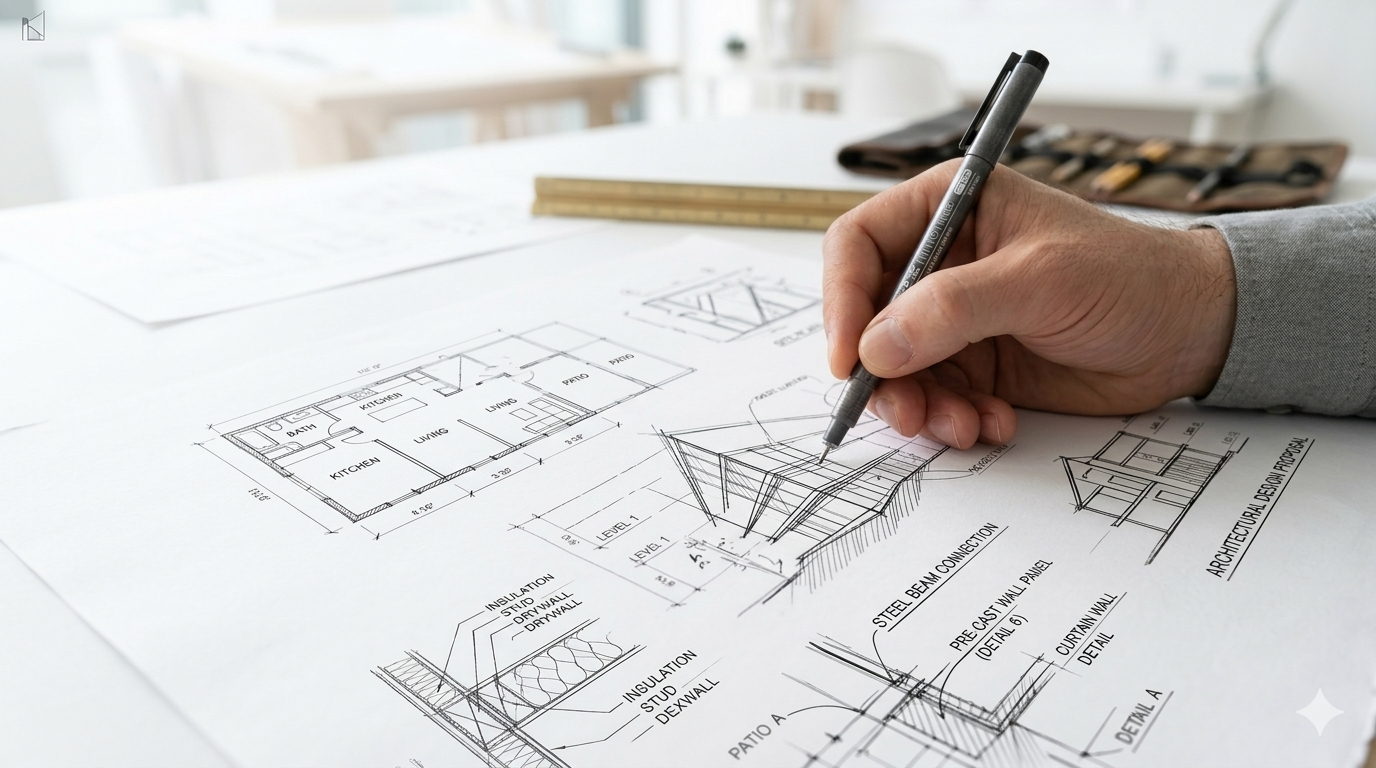
serves as the project's first visual roadmap, transforming the technical data of the Design Brief into a tangible architectural vision. It functions as a disciplined, two-stage process that moves from the internal bones to the external skin of the building.
Stage 1 (The Bones): Focuses on the Master Plan and Floor Plans.
Stage 2 (The Skin): Focuses on the Elevations and 3D Perspectives.
The FEED Design
phase focuses on the technical requirements and the "system-level" design of the project. It is used to define the technical scope, identify potential risks, and provide a high-accuracy cost estimate. During this phase, the guts of the building—mechanical, electrical, plumbing, and structural systems—are engineered to a point where they can be handed over to a contractor for construction.
Detailed Design
phase finalizes all systems — structural, architectural, mechanical, electrical, and plumbing — to 100% completion. It resolves minor physical conflicts, such as the exact placement of light switches or waterproof membranes. This phase also produces a precise Bill of Quantities (BOQ) listing every material needed, enabling accurate procurement. Additionally, all material selections, from paint brands to steel grades, are finalized.
Master planning
Master Planning organizes the entire site with a long-term vision, ensuring current decisions support future growth. It zones the land for specific uses like residential or commercial, plans safe circulation for vehicles and pedestrians, sets construction phases over time, and maps key infrastructure routes (water, power, sewage) to serve all future buildings. This step is generally performed on the concept design task.
Interior design
Interior Design shapes how occupants interact with the building, linking the raw structure to the user experience. It optimizes space by planning furniture, cabinetry, and equipment layout for functionality. It selects textures, colors, and lighting to set the mood and boost productivity. It also ensures technical elements like light switches, power outlets, In this process.
Construction Design
is the bridge between the drafting table and the physical site. It is the final stage of design where drawings are translated into specific instructions for contractors, subcontractors, and fabricators to follow during the actual build.focuses on how the building will be assembled safely, legally, and efficiently. It reviews detailed shop drawings from manufacturers, defines work sequences like waterproofing before flooring, and plans temporary structures such as scaffolding, shoring, and crane setups needed during construction.
CSA & MEP Design
represents the comprehensive engineering of the building's structural body and its technical "life support" systems. This phase turns the conceptual design into a fully integrated system, covering three key areas: Mechanical (HVAC), where the Archineer designs and coordinates air, ventilation, and exhaust systems; Electrical & Data, which involves calculating loads, planning power and emergency systems, and ensuring modern connectivity; and Plumbing, Drainage & Fire Protection, which addresses water supply, waste treatment, and essential fire safety infrastructure.
Construction permit
The Construction Permit phase is the critical legal gateway where the Archineer transitions from designer to regulatory advocate. This process involves submitting the finalized technical package — including architectural, structural, and MEP designs — to the relevant government and local authorities (such as the Ministry of Construction or Village Authorities) to gain official permission to build.